
 PORTUGAL & SOUTHERN SPAIN
September 10 - 22, 2027
Contact [email protected] to reserve
your space!
Trip Cost> Registration Form>
Terms/Cancellation Policies>
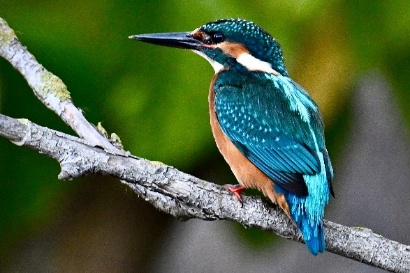
Portugal and southern Spain offer an exceptional combination of landscapes and birdlife, with an extraordinary diversity of habitats packed into a relatively compact region. From the vast tidal estuaries of the Tagus and Sado to the open plains of the Alentejo, the wetlands and coastal lagoons of the Algarve, the marshes of Doñana, and finally the dramatic Strait of Gibraltar, each area supports a distinctive community of birds. Photo above: Kingfisher by Lori Herfurth.
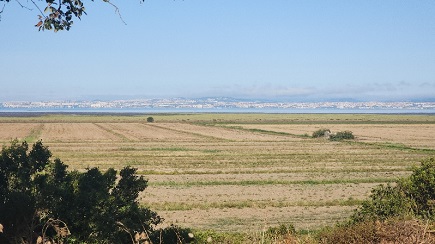
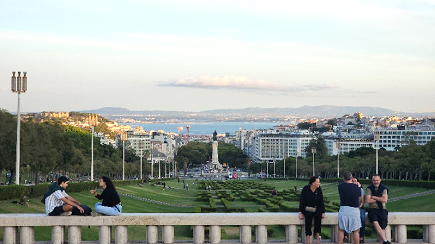
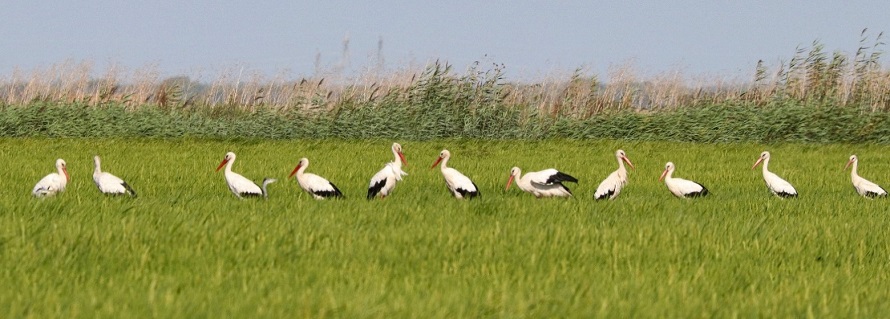
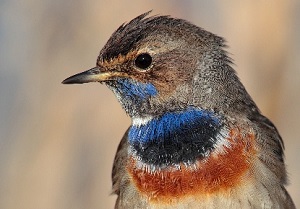 Our journey begins among the rich Tagus Estuary wetlands and salt marshes around Lisbon, where Greater and possibly Lesser Flamingos, White Storks, Glossy Ibises, Eurasian Spoonbills, herons, shorebirds, and a variety of ducks gather in impressive numbers. The surrounding fields and cork-oak woodlands add a very different selection, including Black-winged Kite, Iberian Grey, and Woodchat Shrikes, Spotless Starling, Rock Sparrow, and Cirl Bunting. During migration, these habitats can also produce Bluethroat (Photo by Pedro Marques), Savi’s Warbler, Iberian Chiffchaff, and other European land bird migrants.
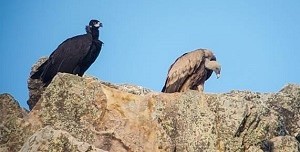 Moving south into Alentejo steppes, the landscape opens into vast rolling plains where Great and Little Bustards, Lesser Kestrels, Calandra Larks, Stone-curlews, Montagu’s Harriers, European Rollers, and Black-bellied Sandgrouse are among the many species to be found. In the rugged valleys of the Guadiana, the scenery changes again, providing opportunities for Black Stork, Spanish (Iberian) Eagle, Bonelli’s and Golden Eagles, Griffon and enormous Cinereous Vultures, Blue Rock Thrush, Red-rumped Swallow, and possibly, White-rumped Swift.
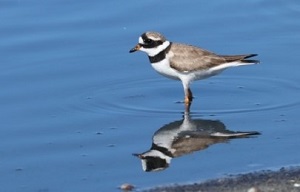 The Algarve brings us back to a rich mosaic of wetlands, dunes, salt pans, lagoons, and coastal habitats. Here we look for specialties such as rare Audouin’s and Slender-billed Gulls, Western Swamphen, Little Bittern, Common and Little Ringed Plovers, Lesser Short-toed Lark, Sardinian and Spectacled Warblers, and Iberian Magpie, while our Pelagic trip off Sagres offers the chance for memorable encounters with shearwaters, storm-petrels, jaegers, and other seabirds, including Great Skua.
Crossing into Spain, the wetlands and rice fields of Doñana provide another dramatic change of habitat. Flamingos, Spoonbills, Glossy Ibises, Red-crested Pochards, Western Swamphens, and other waterbirds share the landscape with rare Marbled, Ferruginous, and White-headed Ducks, Red-knobbed Coots, Pin-tailed Sandgrouse, Stone-curlews, Hoopoes, and Spanish Sparrows.
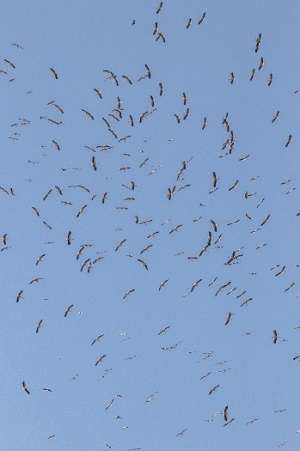 Finally, at Tarifa and the Strait of Gibraltar, the journey reaches one of Europe's great natural spectacles. In late summer and autumn, hundreds of thousands of birds move toward Africa, with Honey Buzzards, Black Kites, White Storks, Booted and Short-toed Eagles, Egyptian Vultures, and Griffon Vultures among the migrants that can be seen crossing the Strait.
 Fall is an especially rewarding time to experience this journey, as birds from across Europe converge on the Iberian Peninsula before continuing south toward Africa. Wetlands become gathering places for waterbirds, coastal habitats funnel migrants along the Atlantic and Mediterranean shores, and the mountains and valleys around Gibraltar concentrate raptors preparing to make the crossing. The result is a trip that combines some of the most spectacular landscapes of Portugal and southern Spain with an exceptional variety of resident, migrant, and regionally distinctive birds.
This is also a journey through regions with a remarkable cultural heritage. Historic towns, castles, archaeological sites, traditional villages, and centuries-old agricultural landscapes complement the birding, while the local cuisine and wines provide a fitting conclusion to each day's exploration.
Trip Cost & Travel Planning> Registration Form> Tour Registration, Terms, Cancellation Policies>
 Daily Itinerary (subject to change based on birds and other factors)
9/10-Day 1 – Plan to arrive at Lisbon Airport (Airport code: LIS) or from your Lisbon hotel before noon. We will meet to start the tour and travel to Alcochete. Today we’ll explore a variety of habitats within the Tagus Estuary Natural Reserve, including the inter tidal mudflats and salt marshes of Hortas, the salt pans of Atalaya, Ribeira das Enguias and Samouco, before uncovering the avian treasures of the Barroca d’Alva rice fields and pastures. We’ll concentrate on shorebirds, waders and waterfowl within the estuary, as well as migrants and other land birds in the uplands. Among the species we may encounter are Greater Flamingo, White Stork, Eurasian Spoonbill, Glossy Ibis, Squacco Heron, Purple Heron, Little Bustard, Collared Pratincole, Black-headed Gull, Bluethroat, Iberian Chiffchaff, Iberian Grey Shrike, Woodchat Shrike, Spotless Starling, Rock Sparrow, European Serin, Cirl Bunting.
Overnight in Alcochete.
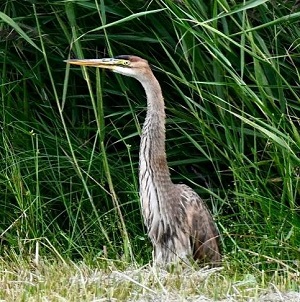
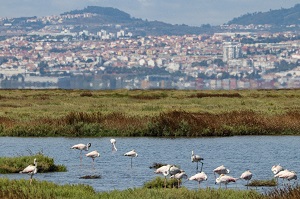 9/11-Day 2 – We’ll spend another full day exploring the Tagus Estuary Natural Reserve, visiting the open fields, rice fields, reed beds, lagoons, inter tidal mudflats and salt marshes of the Ponta da Erva area, as well as the Cork Oak woodlands of Pancas. These varied habitats provide additional opportunities for species such as Black-winged Kite, Booted Eagle, Pallid Swift, Savi’s, Dartford, and Melodious Warblers, Iberian Chiffchaff, Iberian Grey Shrike, Woodchat Shrike, Spotless Starling, Rock Sparrow, European Serin and Cirl Bunting, along with numerous ducks, waders, gulls and terns. Lovely Squacco and Purple Herons may also be seen. Overnight in Alcochete.
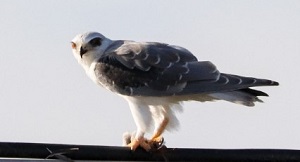 9-12-Day 3 – We’ll travel to Mértola in the Alentejo region and spend the d ay exploring the steppes, the great rolling Dourada Plains around Castro Verde. This is the home of Great Bustard, Red Kite, Black-winged Kite, Montagu’s Harrier, Lesser Kestrel, Eurasian Stone-curlew, Black-bellied Sandgrouse, European Roller, Calandra Lark and Tawny Pipit, among other grassland and agricultural species.
Overnight in Mértola.
9-12-Day 3 – We’ll travel to Mértola in the Alentejo region and spend the d ay exploring the steppes, the great rolling Dourada Plains around Castro Verde. This is the home of Great Bustard, Red Kite, Black-winged Kite, Montagu’s Harrier, Lesser Kestrel, Eurasian Stone-curlew, Black-bellied Sandgrouse, European Roller, Calandra Lark and Tawny Pipit, among other grassland and agricultural species.
Overnight in Mértola.
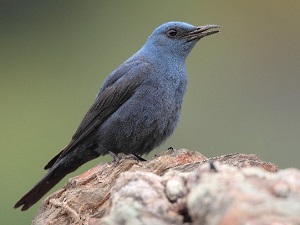
9/13-Day 4 – We’ll explore the bluffs and hills of the Guadiana Valley Natural Park, including the Mértola, Mina de São Domingos and Alcaria Ruiva areas. The region is particularly productive for raptors and cliff-dwelling species, with possibilities for Black Stork, Spanish (Iberian), Golden, and Bonelli’s Eagles, the impressive Cinereous Vulture, Griffon Vulture, Eurasian Eagle-Owl, White-rumped Swift, Iberian Green Woodpecker, Eurasian Crag Martin, Red-rumped Swallow, Black-eared Wheatear, Blue Rock Thrush (Photo by Pedro Marques), Spanish Sparrow, Hawfinch and Rock Bunting. Overnight in Mértola.
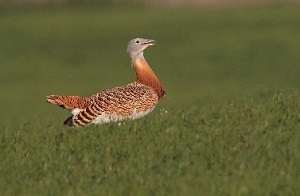 9/14-Day 5 – We’ll continue exploring the Castro Verde rolling plains and Guadiana Valley, visiting additional habitats in search of the region’s specialties. Depending on conditions, we’ll have further opportunities for Great Bustard (Photo by Pedro Marques), Red Kite, Montagu’s Harrier, Lesser Kestrel, Eurasian Stone-curlew, Black-bellied Sandgrouse, European Roller, Calandra Lark and Tawny Pipit, as well as European Turtle Dove, Thekla Lark, and Woodlark, in addition to some of the species seen yesterday.
Overnight in Mértola.
9/14-Day 5 – We’ll continue exploring the Castro Verde rolling plains and Guadiana Valley, visiting additional habitats in search of the region’s specialties. Depending on conditions, we’ll have further opportunities for Great Bustard (Photo by Pedro Marques), Red Kite, Montagu’s Harrier, Lesser Kestrel, Eurasian Stone-curlew, Black-bellied Sandgrouse, European Roller, Calandra Lark and Tawny Pipit, as well as European Turtle Dove, Thekla Lark, and Woodlark, in addition to some of the species seen yesterday.
Overnight in Mértola.
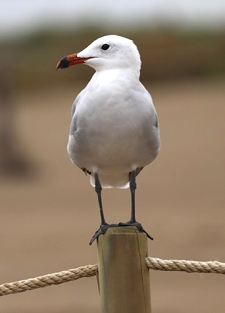 9/15-Day 6 – We’ll travel to Tavira in the Algarve region and explore several habitats within the Ria Formosa Natural Park, including dunes, open water, inter tidal mudflats, salt marshes, salt pans, reed beds, lagoons and pine woods in the Tavira, Olhão, Quinta do Lago and Ludo areas. The wetlands should provide opportunities for rare Audouin’s, and Slender-billed Gulls, Mediterranean Gull, Little Bittern, the enormous Western Swamphen, Lesser Short-toed Lark, Eurasian Hoopoe, Common Kingfisher, European Bee-eater, Sardinian Warbler, Spectacled Warbler and Iberian Magpie, along with an excellent variety of shorebirds, gulls, terns and other waterbirds.
Overnight in Tavira.
9/15-Day 6 – We’ll travel to Tavira in the Algarve region and explore several habitats within the Ria Formosa Natural Park, including dunes, open water, inter tidal mudflats, salt marshes, salt pans, reed beds, lagoons and pine woods in the Tavira, Olhão, Quinta do Lago and Ludo areas. The wetlands should provide opportunities for rare Audouin’s, and Slender-billed Gulls, Mediterranean Gull, Little Bittern, the enormous Western Swamphen, Lesser Short-toed Lark, Eurasian Hoopoe, Common Kingfisher, European Bee-eater, Sardinian Warbler, Spectacled Warbler and Iberian Magpie, along with an excellent variety of shorebirds, gulls, terns and other waterbirds.
Overnight in Tavira.
9/16-Day 7 – We’ll visit the Sagres and Cape St. Vincent regions, including a pelagic trip off Sagres. During the fall migration period, this area offers abundant opportunities to observe migrating birds, while the pelagic trip should provide excellent possibilities for European Shag, Great Skua, Parasitic and Pomarine Jaegers, Great, Cory’s, Balearic, and Manx Shearwaters, and European and Wilson’s Storm-Petrels. On land, we’ll look for species such as Red-necked Nightjar, European Bee-eater, Eurasian Hoopoe, Sardinian and Spectacled Warblers, Red-billed Chough and Crested Tit. Afterwards, we’ll visit Salgados Lagoon with hopes of a few new waterbird species. Overnight in Tavira.
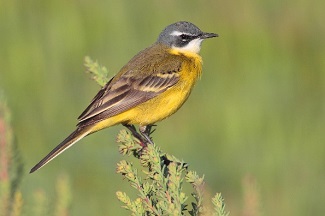 9/17-Day 8 – We’ll travel to Villamanrique de la Condesa in Andalucía, visiting the salt pans and salt marshes of the Castro Marim Natural Reserve and the Aldeia Nova Lake before continuing to the El Rocío area of Doñana National Park. The wetlands and surrounding habitats offer possibilities for seeing rare Marbled Duck, Ferruginous Duck, and White-headed Duck, along with Red-crested Pochard, Common Pochard, Little Grebe, Great Crested Grebe, the elusive, Red-knobbed Coot, Water Rail, Marsh Sandpiper, Pin-tailed Sandgrouse, Eurasian Scops Owl, Western Yellow Wagtail (Photo by Pedro Marques), Penduline Tit and Long-tailed Tit, as well as numerous gulls, terns and waders.
Overnight in Seville.
9/17-Day 8 – We’ll travel to Villamanrique de la Condesa in Andalucía, visiting the salt pans and salt marshes of the Castro Marim Natural Reserve and the Aldeia Nova Lake before continuing to the El Rocío area of Doñana National Park. The wetlands and surrounding habitats offer possibilities for seeing rare Marbled Duck, Ferruginous Duck, and White-headed Duck, along with Red-crested Pochard, Common Pochard, Little Grebe, Great Crested Grebe, the elusive, Red-knobbed Coot, Water Rail, Marsh Sandpiper, Pin-tailed Sandgrouse, Eurasian Scops Owl, Western Yellow Wagtail (Photo by Pedro Marques), Penduline Tit and Long-tailed Tit, as well as numerous gulls, terns and waders.
Overnight in Seville.
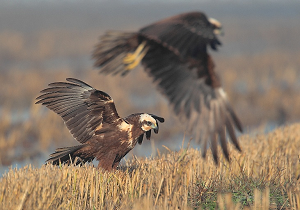 9/18-Day 9 – We’ll spend the day exploring the western sector of Doñana National Park, including the Isla Mayor rice fields, the lagoons and woods around Villamanrique de la Condesa,
 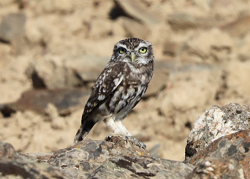 Dehesa de Abajo, Caño Guadiamar and the José António Valverde Centre. These varied wetlands, rice fields and woodlands provide another excellent opportunity to find Marbled, Ferruginous, and White-headed Ducks, Western Marsh Harrier (Photo by Pedro Marques), Little Owl and other birds of prey, and any of the species we may have missed yesterday.
Overnight in Seville.
Dehesa de Abajo, Caño Guadiamar and the José António Valverde Centre. These varied wetlands, rice fields and woodlands provide another excellent opportunity to find Marbled, Ferruginous, and White-headed Ducks, Western Marsh Harrier (Photo by Pedro Marques), Little Owl and other birds of prey, and any of the species we may have missed yesterday.
Overnight in Seville.
9/19-Day 10 – We’ll travel to Tarifa, visiting the eastern sector of Doñana National Park along the way, including the areas of Trebujena, the salt pans of Bonanza and Algaida, and Tarelo Lagoon. These wetlands provide further opportunities for waterfowl, gulls, terns, and especially shorebirds, including some potential rarities. As we approach Tarifa, we’ll begin to experience one of the most spectacular areas for fall migration in the Iberian Peninsula. Overnight in Tarifa.
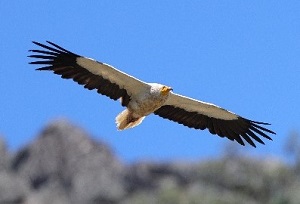
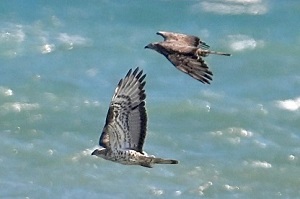 9/20-Day 11 – We’ll spend the day exploring the Tarifa and Gibraltar areas during the peak of the fall migration season. This is an outstanding area for observing mass movements of White, and Black Storks, European Bee-eaters, and especially raptors, including, Marsh Harrier, Black Kite, Short-toed Snake Eagle, Booted Eagle, Egyptian Vulture (Photo by Pedro Marques) Common Buzzard, and European Honey Buzzards (Photo by Lori Herfurth), as well as Eurasian Sparrowhawk, and Northern Goshawk. There are chances for rarities such as Rüppell's Griffon from Africa, and less common migrants, such as Montagu’s, and Hen Harriers, and Bonelli’s Eagles.
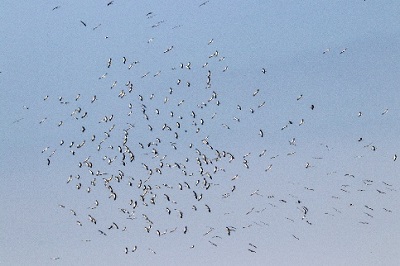 Coastal overlooks along the Straits also provide excellent possibilities for seeing Balearic and Cory’s Shearwaters, Audouin’s, Yellow-legged, and Lesser Black-backed Gulls, and migrating passerines.
Overnight in Tarifa.
Coastal overlooks along the Straits also provide excellent possibilities for seeing Balearic and Cory’s Shearwaters, Audouin’s, Yellow-legged, and Lesser Black-backed Gulls, and migrating passerines.
Overnight in Tarifa.
9/21-Day 12 – We’ll make a final morning visit to the Tarifa and Gibraltar areas, taking advantage of any remaining migration opportunities, before traveling back to Lisbon for our farewell dinner and final overnight stay. End of program.
Overnight in Lisbon.
9/22-Day 13 – Flights home.
SUNRISE BIRDING LEADER: FRANK GALLO
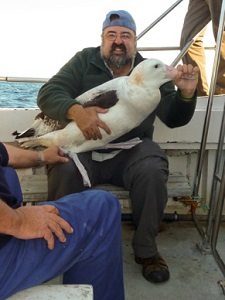 Frank holds a biology degree specializing in ornithology from S.C.S.U. and is a leading expert on where to find birds in Connecticut (CT). An environmental educator at heart, his talks, walks, and tours have inspired countless birders to appreciate our region’s birdlife. A superb birder, Frank has led tours throughout No. America and abroad. He especially loves Spain and the Caribbean. Before joining the Sunrise Birding team, Frank was Senior Naturalist and Director of CT Audubon Society’s Coastal Center at Milford Point, the New Canaan Nature Center’s (NCNC) Director of Eco-Travel & Field Studies, New Haven’s first Edgewood Park Ranger, and a past president of the New Haven Bird Club. He is currently Senior Naturalist at NCNC, Co-Secretary of the CT Avian Rare Records Committee, and a federally licensed master bird bander.
Frank is a published freelance photographer, lecturer, and author of two wonderful children's nature books, Bird Calls and Night Sounds, and the comprehensive bird finding guide, Birding in Connecticut. In 2003, he received the Environmental Educator of the Year award from the CT Outdoor Environmental Education Association.
Photos by Frank Gallo unless otherwise noted.
Trip Cost & Travel Planning> Registration Form> Tour Registration, Terms, Cancellation Policies>
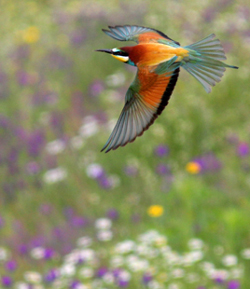 Portugal & Southern Spain Portugal & Southern SpainSeptember 10 - 22, 2027 Registration Form> Contact [email protected] to reserve your space! MAIN TOUR PRICE: **$7895 per person based on double occupancy from Lisbon, Portugal (Airport code: LIS) and a minimum of 6 passengers. Tour price includes a contribution to the Conservation Project in the Guadiana Valley Natural Park. **Denotes provisional pricing. Price will be honored for those booking while provisional price is posted. Single supplement, Main tour: **$995 per person, subject to availability. **Provisional pricing. Price will be honored for those booking while provisional price is posted. Deposit: $1000.00 per person. Note: Tour deposits can be paid by credit card via PayPal. Use this link to make your credit card payment. Please advise [email protected] when you have made payment. Included in cost: Accommodation in double / twin en suite rooms with full board, group transportation on arrival, detailed pre-trip materials and checklists, services of local guide and tour leaders throughout the trip. Cost is based on double occupancy and a minimum of 6 passengers and includes, group transfer from the airport/hotel on day 1, private transportation in air-conditioned vehicles during the tour, all accommodation, meals from lunch on Day 1 until dinner on Day 12, professional guide services, local guides, local park and reserve entrance fees, participant’s accident insurance and VAT. Not included: Round-trip travel/flight to Lisbon, Portugal (Airport code LIS), travel insurance, drinks, tips, and items of a personal nature such as laundry, telephone, beverages, gratuities for porterage, guides, or personal services. Also, any and all costs arising from illness-related issues are not included in the tour cost and are the sole responsibility of the traveler. These include, among others, the costs of medical treatment, hospitalization, medical fees, transport, meals and accommodation in case of illness or quarantine, and the costs of any medical tests needed before, during and after the tour.
Tour Code: This is a standard birding tour with all day birding. No particular strenuous walks are planned but there are some uphill treks. To see a good amount of specialties you need to be prepared for full days. We will generally start early and either have an early breakfast or return for breakfast. Lunches will be either picnic or at the lodges depending on our schedule.
Check or bank transfer are preferred but credit card payments are possible (surcharges of up to 5% are added depending on amount to cover credit card company fees). Final payment is due May 10, 2027.
**Please
note: Tour prices
are based on quoted
costs from ground
operators (in
their local currency),
estimated fuel
costs, and the
rate of exchange
the time of itinerary
publication. The
erratic nature
to global financial
markets makes
it difficult to
predict changes
in costs and foreign
currency exchange
rates over the
long term. Since
tours are priced
well in advance
of the actual
operation of the
tour, tour costs,
fuel costs and
exchange rates
can change, sometimes
drastically. Depending
on the extent
of such changes,
it may be necessary
to implement a
surcharge on this
tour. If a surcharge
is necessary,
every effort will
be made to minimize
the amount. Cancellations
and Refunds:
TRIP INSURANCE:
|
Questions? Contact Gina Nichol at gina@sunrisebirding.com